
Last updated September 22, 2026
Non-destructive entry first, always - and we re-key Schlage, Kwikset, and Baldwin locks on the spot while you watch
You get a price before we start. It does not change when we arrive. No surprises.
Locksmith Permits, Codes & Inspections in CA: What You Need to Know
If a locksmith installs an electric strike on a fire-rated door in your Los Angeles commercial space without the correct hardware listing and inspection sign-off, the building owner - not the locksmith - is liable in a fire-code enforcement action. Most California property owners assume locksmith work is permit-free because it happens fast and leaves no visible construction mess. That assumption is correct for a deadbolt swap in a single-family home. It is dangerously wrong for access control wiring, fire-rated hardware, and certain master key systems in multi-unit buildings. This guide identifies exactly which locksmith tasks in California cross into permitted territory, which building departments have jurisdiction, and how to protect yourself with documentation. For related reading, see our Locksmith Warning Signs: A Los Angeles Homeowner’s Reference Guide.
Quick Answer
Most residential lock replacements and rekeys in California require no permit. Electric strikes, magnetic locks, access control wiring, panic hardware on fire-rated doors, and delayed-egress systems typically require permits and inspections through the local building department or fire marshal. In Los Angeles, the Department of Building and Safety (LADBS) and the LA County Fire Marshal each enforce overlapping code sections, and compliance documentation must list the specific fire-rating label of the door assembly being modified.
Table of Contents

- Mechanical Lock Work vs. Permitted Installations
- How Los Angeles Building Departments Treat Locksmith Work
- California Fire Code: Egress Hardware, Panic Devices, and Delayed-Egress Locks
- CSLB C-28 vs. C-10: Which License Covers What
- Access Control Systems: When Permits Trigger and Who Pulls Them
- Documentation to Request from Your Locksmith Contractor
- Residential Exceptions and Common Misunderstandings
- Commercial and Multi-Family: Where Liability Concentrates
Mechanical Lock Work vs. Permitted Installations
The dividing line is not complexity. It is fire safety, electrical integration, and occupancy load.
These tasks generally require no permit in California:
- Replacing a residential deadbolt or knob set with a functionally identical unit
- Rekeying existing cylinders (Kwikset, Schlage, Medeco, or otherwise)
- Installing a new mechanical deadbolt on a non-fire-rated residential door
- Key duplication
- Lockout service (non-destructive entry)
- Repairing or replacing interior door hardware on non-rated doors
These tasks conditionally require permits:
- Electric strikes or magnetic locks on any fire-rated door assembly
- Access control systems with low-voltage wiring run through walls or ceilings
- Panic hardware or exit devices on commercial doors with occupancy loads of 50 or more
- Delayed-egress locks in any occupancy type
- Master key systems that modify fire-rated door hardware in multi-family buildings
- Any lock installation that alters the labeled fire-rating of the door, frame, or hardware assembly
The conditional nature matters. An electric strike on a non-fire-rated interior office door in a small commercial suite may not trigger permitting in some Los Angeles jurisdictions. The same strike on a 90-minute fire-rated corridor door in a Downtown LA high-rise absolutely does. The door’s label - typically a metal tag on the hinge edge reading “UL 10C” or “NFPA 252” with a time rating - determines the requirement, not the locksmith’s convenience.
We’ve seen this distinction ignored repeatedly. In 2019, a property manager in the Arts District hired an unlicensed operator to install magnetic locks on three fire-rated stairwell doors. No permits, no inspections, no documentation of the hardware’s fire listing. When LA County Fire conducted a routine inspection, the building received a correction notice with 30 days to bring the doors into compliance or face occupancy restrictions. The property manager paid twice: once for the original installation, once for the permitted replacement with listed hardware and inspection sign-off.
How Los Angeles Building Departments Treat Locksmith Work
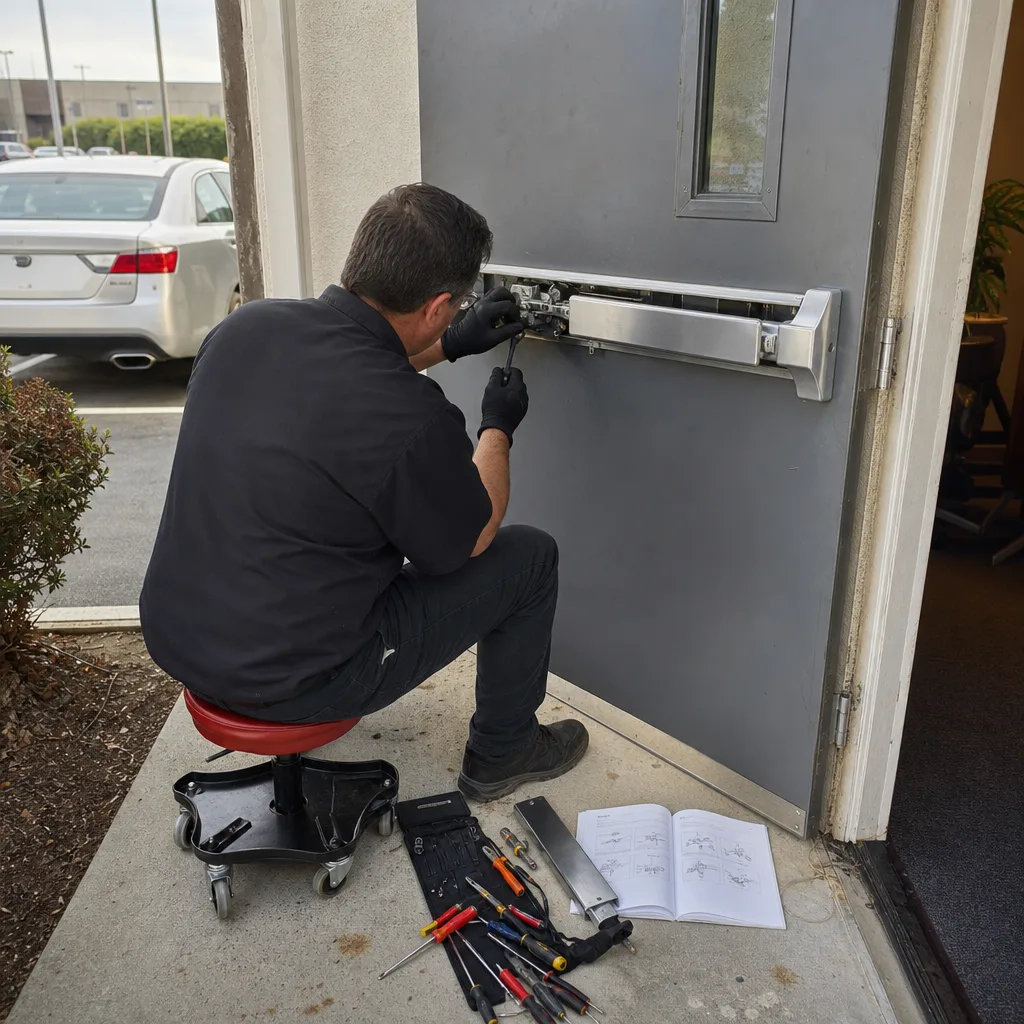
Los Angeles is not monolithic. The city of Los Angeles, the county unincorporated areas, and the 88 incorporated cities within LA County each maintain their own building departments or contract with LA County for plan check and inspection services. This fragmentation creates real variation in how access control and fire-door hardware permitting is enforced.
City of Los Angeles - LADBS
The Los Angeles Department of Building and Safety (LADBS) processes permits for electrical work, fire-alarm modifications, and structural changes. For locksmith-adjacent work, LADBS generally requires an electrical permit for:
- Any new low-voltage wiring for access control, including door contacts, card readers, and request-to-exit devices
- Power transfer devices (electrified hinges or door loops) supplying voltage to lock hardware
- Integration with fire-alarm systems for automatic unlocking on alarm
LADBS does not typically require a separate permit for mechanical-only lock replacement, even on commercial doors, provided the door is not fire-rated and the hardware does not connect to building systems. However, LADBS inspectors will flag unpermitted electrical work during other inspections, and the city’s Code Enforcement division responds to complaints.
LA County Unincorporated Areas and Contract Cities
Areas under LA County Building and Safety - including unincorporated communities like East Los Angeles, Florence-Firestone, and portions of the San Fernando Valley - follow similar thresholds but with longer plan-check timelines. Access control permits in county jurisdiction typically require 10-15 business days for plan check, compared to LADBS’s express track for minor electrical work.
Independent Cities with Their Own Departments
Cities like Santa Monica, Pasadena, Long Beach, and Burbank maintain independent building departments with their own interpretations. Santa Monica, for instance, requires fire-department plan check for any delayed-egress lock installation, regardless of occupancy size. Pasadena interprets “alteration to means of egress” broadly and may require permits for panic hardware replacement if the existing device is more than 10 years old. These variations are not always published clearly; they emerge in plan-check comments or inspection corrections.
For property owners in Los Angeles, the practical rule is: if the building has a fire-rated door, a fire-alarm system, or an occupancy load posted by the fire marshal, permit research is mandatory before any electrified hardware installation. Our Seasonal Locksmith Care for Los Angeles: Year-Round Homeowner’s Guide covers additional maintenance timing considerations.
California Fire Code: Egress Hardware, Panic Devices, and Delayed-Egress Locks
California adopts the California Fire Code (CFC), which is based on the International Fire Code with state amendments. The sections governing locksmith-installed hardware are specific, numbered, and enforced by fire marshals with citation authority.
CFC Section 1008.1.9: Panic and Fire Exit Hardware
This section requires panic hardware on doors serving assembly, educational, and high-hazard occupancies with an occupant load of 50 or more. The hardware must be listed to UL 305 (panic hardware) or UL 10C (fire exit hardware). A locksmith installing panic hardware must verify the door’s existing fire rating and specify hardware with a matching or exceeding rating. Installing standard panic hardware on a fire-rated door without the fire-exit listing violates this section.
CFC Section 1008.1.9.7: Delayed Egress Locks
Delayed-egress locks - which hold a door secured for 15 or 30 seconds after the push bar is depressed - are permitted only with fire-department approval, integration with the fire-alarm system for automatic release, and signage meeting specific size and wording requirements. The CFC limits these to specific occupancy types and requires a key switch or other override accessible to fire personnel. We’ve encountered building owners in Koreatown and Mid-Wilshire who were sold delayed-egress systems by security companies with no fire-department coordination. The systems were removed at the owner’s expense after fire marshal inspection.
CFC Section 1008.1.9.8: Electrically Controlled Egress Doors
Electric strikes and magnetic locks fall here. The code requires:
- Automatic release upon fire alarm activation
- Manual release capability at the door (push-to-exit button or bar)
- UPS battery backup maintaining release function for minimum 30 minutes
- Signage reading “PUSH TO EXIT” in letters at least 1 inch high
The fire-alarm integration typically triggers fire-alarm permit requirements, even if the lock installation itself seemed minor.
Los Angeles Fire Department Specifics
LAFD’s Fire Prevention Bureau inspects commercial occupancies on cycles ranging from annual (high-hazard) to triennial (office). Inspectors carry the current CFC and check hardware labels against door labels. In our experience, the most common violations in Los Angeles commercial buildings are:
- Magnetic locks with no manual release button within 5 feet of the door
- Electric strikes installed on fire-rated doors with hardware lacking the proper fire listing
- Delayed-egress locks with expired fire-department approval letters
- Doors modified with additional locking devices that prevent single-motion egress
The penalty is not merely a fine. LAFD can issue an Order to Comply with a compliance deadline, and failure to meet that deadline can result in a Notice of Violation that affects insurance coverage and lease enforceability.
CSLB C-28 vs. C-10: Which License Covers What

The Contractors State License Board (CSLB) issues classifications that determine what work a contractor may legally perform. For locksmith and access control work, two classifications matter: C-28 (Lock and Security Equipment) and C-10 (Electrical).
C-28: Lock and Security Equipment Contractor
A C-28 license authorizes the installation, repair, and maintenance of:
- Mechanical locks, cylinders, and keying systems
- Keyless entry systems with battery-powered or plug-in components
- Safe and vault work
- Basic door hardware (hinges, closers, weatherstripping in conjunction with lock work)
- Low-voltage access control systems, provided the wiring does not exceed 24 volts and 10 VA per circuit
The voltage and volt-ampere limitation is critical. Most modern access control systems - card readers, biometric scanners, networked controllers - operate at 12 or 24 volts but aggregate well above 10 VA when multiple devices share a power supply. A C-28 contractor legally cannot run the power distribution for these systems.
C-10: Electrical Contractor
A C-10 license is required for:
- Any electrical work exceeding 24 volts/10 VA
- Connection to building electrical panels or permanent wiring
- Fire-alarm system integration or modification
- Installation of power supplies, transformers, or conduit runs for access control
- Any work requiring an electrical permit from LADBS or equivalent
The Overlap Problem
Many access control projects in Los Angeles require both classifications. A C-28 locksmith can install the card reader and electrified strike. A C-10 electrician must install the power supply, run conduit, and connect to the fire-alarm system. Some C-28 holders also hold C-10 classifications; some maintain subcontractor relationships. The property owner’s risk is hiring a C-28-only contractor for a project that needs C-10 work, then discovering the deficiency at inspection.
At Novak Lock & Security Los Angeles home, we hold the C-28 classification and maintain established relationships with C-10 electrical contractors for projects requiring both. We disclose this division of scope in our written proposals, with each trade’s work itemized separately. Haven Standard Clause 4 requires this transparency: no trade performs work outside its license classification.
Access Control Systems: When Permits Trigger and Who Pulls Them
Access control spans a wide range of complexity, and permit requirements scale with that complexity. Understanding the triggers helps property owners budget realistically and avoid mid-project stops.
No Permit Typically Required
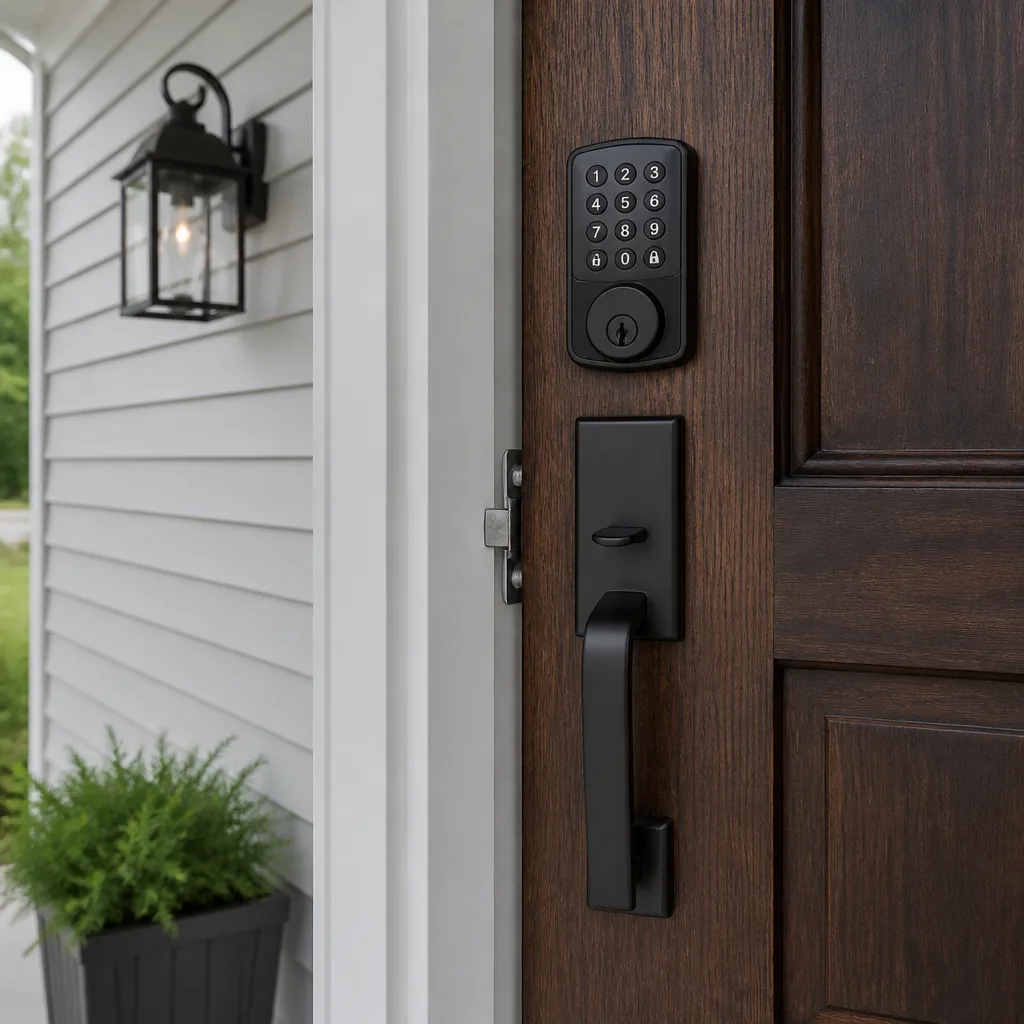
- Standalone keypad locks with battery power (e.g., Schlage electronic deadbolts, Yale keypad levers)
- Single-door magnetic locks with plug-in power adapters (rare in commercial settings due to code)
- Replacement of existing access control devices with identical models in same locations
Electrical Permit Required
- Any hardwired card reader or biometric device
- Multi-door controllers with centralized power
- Network cable runs through walls or ceilings (may also trigger low-voltage permit in some jurisdictions)
- Integration with existing building management or security systems
Fire-Alarm Permit Required
- Any access control device tied to fire-alarm release
- Delayed-egress locks requiring fire-department approval
- Modifications to existing fire-alarm panel programming for door release
Who Pulls the Permit?
In California, the property owner or their licensed contractor of record pulls permits. A locksmith cannot pull an electrical permit without a C-10 license. A property owner can pull their own permit as owner-builder, but this carries liability: the owner becomes the responsible party for code compliance and inspection passage.
For commercial projects in Los Angeles, we recommend the contractor pull all permits. This places code compliance responsibility with the licensed professional and ensures the work is covered by the contractor’s insurance. Our written proposals specify who pulls which permit, with permit fees itemized or estimated. Haven Standard Clause 1 applies: the price on the phone is the price on the invoice, including permit fees unless the building department changes its fee schedule after proposal date.
Access Control Systems in Los Angeles that we design and install are scoped with permit requirements identified before work begins. We’ve seen too many projects stall when a $15,000 access control installation encounters a $2,500 permit and inspection process that was never discussed.
Documentation to Request from Your Locksmith Contractor
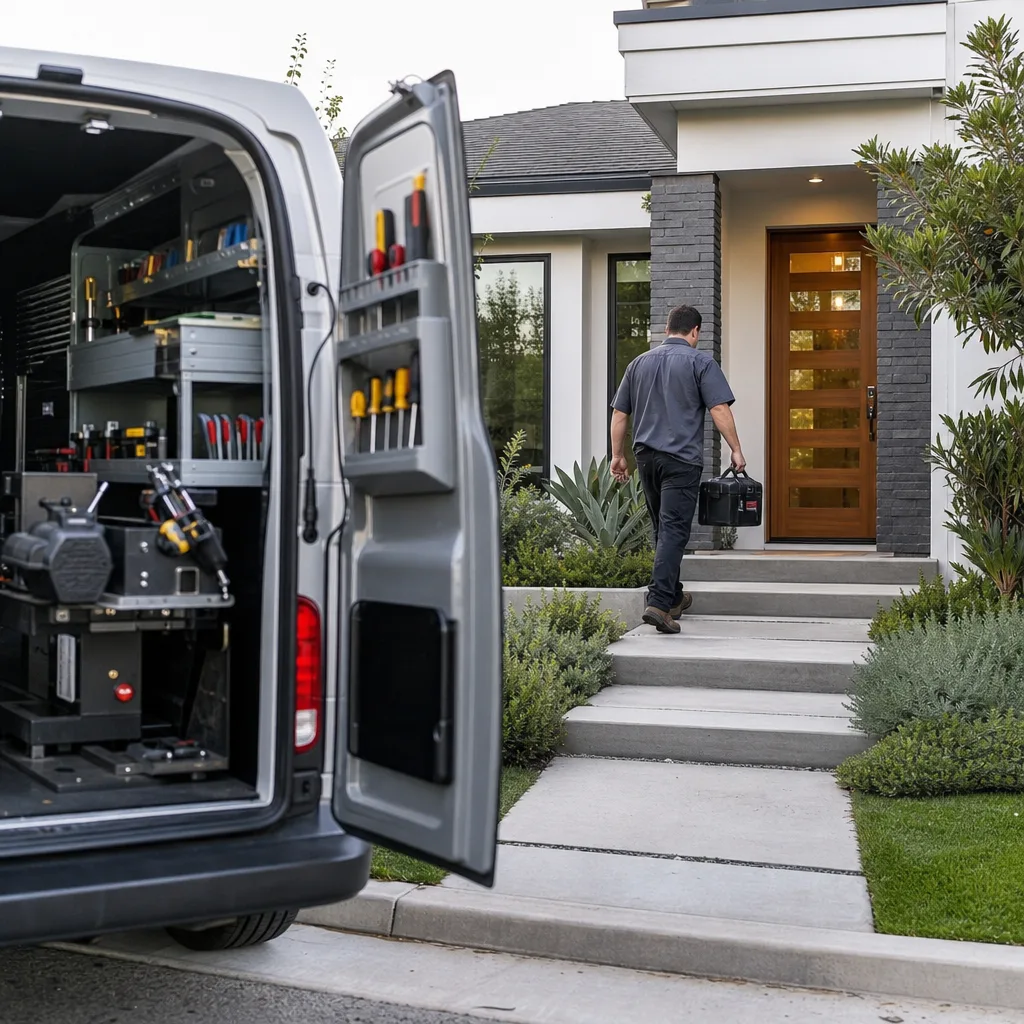
Code compliance is only as good as the paper trail. After installation, you should receive specific documents that demonstrate the work meets applicable codes. Request these explicitly; most contractors will not volunteer them.
- Written proposal or contract with scope of work - Should specify each device by manufacturer and model number, door locations, and whether permits are included. Novak Lock & Security Los Angeles provides this on every job, with Haven Standard Clause 1 pricing.
- Proof of license classification - CSLB license number, verifiable at cslb.ca.gov. Confirm the classification matches the work: C-28 for mechanical and limited low-voltage, C-10 for electrical. If both are needed, both should be documented.
- Insurance certificate - General liability and workers’ compensation, with the property owner named as certificate holder if the project is substantial.
- Hardware fire-rating documentation - Manufacturer’s data sheets showing UL 10C or NFPA 252 listing, with time rating matching the door assembly. For panic hardware, UL 305 listing. This is not a user manual; it is a test report or certification letter from the testing laboratory.
- Permit copies and inspection sign-offs - If permits were required, you should receive copies of the approved plans, inspection cards with passed inspection stamps, and final approval documentation. In Los Angeles, LADBS provides online permit status tracking; the contractor should provide the permit number for your verification.
- Fire-department approval letter - For delayed-egress locks and some magnetic lock installations, LAFD or the county fire marshal issues an approval letter with conditions and expiration date. This is separate from building department approval.
- As-built drawings or wiring diagrams - For access control systems, documentation of actual device locations, wire runs, and programming parameters. Essential for future maintenance and troubleshooting.
- Warranty documentation - Device warranties from manufacturers and workmanship warranty from the installer. Our 365-Day Done Right Promise is documented on every invoice; manufacturer warranties for Baldwin, Medeco, and other premium brands are provided with serial numbers recorded.
- Photo record of installation - Documented condition before, during, and after work. We leave a photo record with every customer as standard procedure under The Haven Standard, showing device placement, wiring methods, and door condition.
If a contractor cannot or will not produce these documents, that is itself information. The cheapest bid often omits the documentation that protects you in an enforcement action or insurance claim.
Residential Exceptions and Common Misunderstandings
Single-family and duplex residential work enjoys the broadest permit exemptions in California. The exceptions are narrower than many assume, however, and the consequences of misunderstanding them can be severe in specific circumstances.
What Never Needs a Permit in Residential
- Replacing a deadbolt or knob set with a similar function unit
- Rekeying any number of cylinders
- Installing a new mechanical lock on a non-fire-rated door
- Key duplication and lockout service
What Surprisingly Can Need a Permit
- Electric strikes or magnetic locks on garage-to-house doors that are fire-rated (required in some newer California construction under Title 24)
- Access control systems with hardwired components in accessory dwelling units (ADUs), which are treated as separate dwellings
- Any lock modification that impedes emergency egress from a sleeping room - California Building Code Section 1031 requires single-motion release from the interior
- Smart locks with integrated cameras and hardwired power in condominiums, where the wiring may violate HOA rules and trigger electrical permitting
The ADU Trap
Los Angeles has seen explosive ADU construction under state-mandated streamlining. Many homeowners install separate access control or keying for ADU tenants. Because ADUs are separate dwelling units, locks on ADU exterior doors must meet the same egress requirements as primary dwelling units. We’ve encountered ADU owners who installed double-cylinder deadbolts (key required from inside) on ADU doors, not realizing this violates CBC egress requirements for sleeping rooms. The fix is a single-cylinder deadbolt or a code-compliant thumb-turn.
Condominium and HOA Complications
In Los Angeles condo buildings, exterior door hardware is often common area, and modification requires HOA approval. More critically, some HOAs mandate specific lock brands or keying systems for master key compatibility. A homeowner in a Beverly Hills condo building who independently installs a non-approved lock may be required to remove it at their expense. We always verify HOA requirements before specifying hardware in condo projects.
Commercial and Multi-Family: Where Liability Concentrates
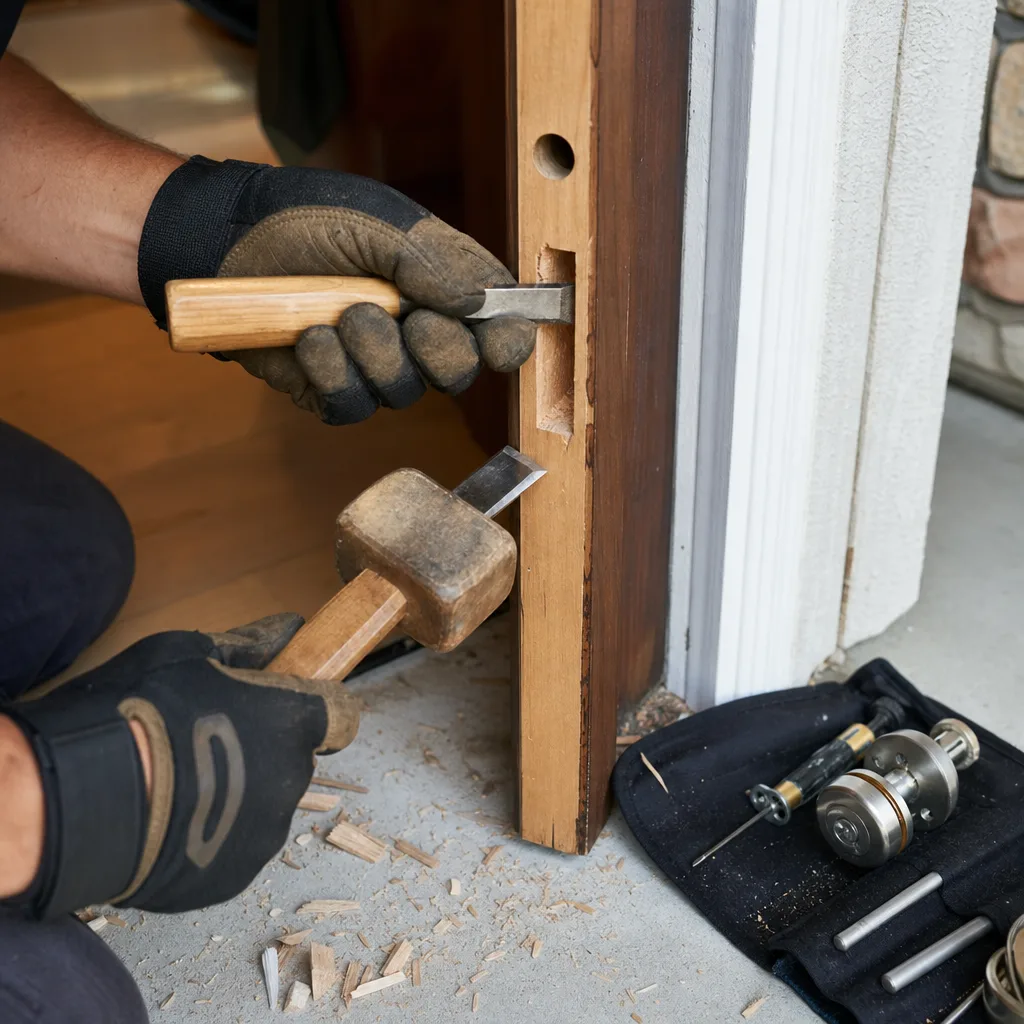
The highest-stakes locksmith work in California happens in commercial and multi-family residential buildings. The code requirements are densest, the inspection regimes are strictest, and the liability for non-compliance falls hardest on property owners.
Multi-Family Residential (3+ Units)
California Health and Safety Code and the California Building Code impose specific requirements:
- Main entry doors must have keyless egress (interior push-bar or panic hardware) if the building has three or more units and the door serves as a required exit
- Individual unit doors must allow single-motion release from inside without key, tool, or special knowledge
- Master key systems must maintain the ability for emergency personnel to access units; some jurisdictions require Knox Box installation for fire-department master keys
- Rekeying after tenant turnover is the owner’s responsibility; failure to rekey can create liability if a former tenant gains unauthorized access
In Los Angeles rent-controlled buildings, the Housing Department’s Systematic Code Enforcement Program (SCEP) inspects units on a 3-4 year cycle. Inspectors check door hardware for proper operation and egress compliance. A failed inspection triggers a re-inspection fee and potential rent registration holds.
Commercial Tenant Improvements
When a commercial tenant in Los Angeles modifies their suite, locksmith work is often buried in the larger TI permit. The general contractor pulls the permit, and the locksmith is a subcontractor. The danger is that the locksmith’s scope - panic hardware, access control, electric strikes - is assumed to be covered by the GC’s permit without specific inspection. We’ve been called to Downtown LA and Arts District buildings where the tenant improvement was signed off, but the locksmith-installed hardware was never individually inspected and later failed fire marshal review. See our Commercial Locksmith Maintenance Checklist for Los Angeles Homeowners for a systematic review process.
The protective step: verify that your locksmith’s specific work is listed on the permit and included in inspection scheduling. A general permit for “tenant improvement” does not automatically cover specialized hardware.
Commercial Locksmith in Los Angeles
Our commercial work includes permit coordination as a standard service element, not an add-on. We identify jurisdictional requirements, specify listed hardware, and provide the documentation package described above. For Residential Locksmith in Los Angeles multi-family projects, we coordinate with property managers to schedule work between inspections and minimize tenant disruption.
Common Mistakes to Avoid
- Assuming all locksmith work is permit-free. Electric strikes, access control, and fire-rated hardware frequently require permits. Verify before work starts, not after inspection failure.
- Hiring based on lowest bid without verifying license classification. A C-28 contractor cannot legally perform C-10 electrical work. If your project needs both, the low bid that omits the electrical contractor is not complete.
- Ignoring the door label. The fire-rating tag on the door edge determines hardware requirements. Installing non-listed hardware on a fire-rated door creates liability that survives the original installer.
- Failing to request fire-department approval for delayed-egress locks. In Los Angeles, LAFD approval is mandatory and separate from building department permitting. The approval letter has an expiration; track it.
- Accepting verbal assurances instead of written documentation. Code compliance disputes are resolved with paper. If the contractor won’t document the hardware listing, permit status, or warranty terms, the protection you assume you have does not exist.
- Installing double-cylinder deadbolts on sleeping room doors. This violates California egress requirements and creates liability in fire or emergency situations. Single-cylinder with interior thumb-turn is required.
- Overlooking ADU-specific requirements. Accessory dwelling units are separate dwelling units under the code. Egress, keying, and access control rules apply fully, not as an afterthought.
When to Call a Professional
Call a licensed locksmith when the work involves anything beyond a direct replacement of existing mechanical hardware on a non-rated door. Call before you purchase hardware for a commercial or multi-family project. Call when you are unsure of your door’s fire rating, when the project includes wiring, or when the building department or fire marshal has already issued a correction notice.
The cost of a consultation is negligible against the cost of removing and replacing non-compliant hardware, paying re-inspection fees, or defending a liability claim.
Novak Lock & Security Los Angeles offers free estimates in Los Angeles. We will review your project, identify permit requirements, and provide a written scope with firm pricing before any work begins. Call (213) 632-4875, or browse more guides & resources on our blog.
Frequently Asked Questions
No. Replacing or rekeying residential locks on single-family homes and duplexes does not require a permit in any California jurisdiction. The exception is rare: if the door is fire-rated (some garage-to-house doors in newer construction) and you are installing electrified hardware, consult your local building department.
Permitted access control or fire-door hardware installation in Los Angeles typically runs $1,200-$4,500 per door for commercial-grade electric strikes, magnetic locks, and card reader systems, including hardware, labor, permit fees, and inspection coordination. Simple panic hardware replacement on a non-electrified commercial door runs $400-$900 installed. We quote firm prices in writing before starting; Haven Standard Clause 1 prohibits changing the price at the door. Call (213) 632-4875 for an exact quote on your specific doors.
Yes. The price our dispatcher quotes is the price on the invoice. This rule has been in place since 2002 and is contractually binding on our technicians. The only exception is if you add scope after the quote - for example, requesting additional doors be rekeyed after the technician arrives. Even then, we quote the additional work in writing before proceeding.
Verify the CSLB license number at cslb.ca.gov. For mechanical lock work, confirm C-28 classification. For access control with hardwired power or fire-alarm integration, confirm C-10 classification or a documented subcontractor relationship with a C-10 contractor. Ask for proof of insurance and request hardware data sheets showing proper fire listings. A legitimate contractor provides these without hesitation.
The fire marshal issues an Order to Comply with a deadline, typically 30 days. Failure to comply can result in fines, occupancy restrictions, or closure of the business or building. In Los Angeles, LAFD can escalate to a Notice of Violation that becomes public record and affects insurance coverage. The property owner bears liability; the unlicensed installer typically does not.
Only if the locksmith holds a C-10 electrical contractor license. A C-28 lock and security equipment contractor cannot pull electrical permits. Some projects require both classifications. At Novak Lock & Security Los Angeles, we disclose this division transparently in our written proposals and coordinate C-10 subcontractors when needed.
Battery-powered smart locks like Schlage Encode or Yale Assure typically do not require permits. Hardwired smart locks, or smart locks integrated with access control systems or fire-alarm release, may require electrical and/or fire-alarm permits depending on jurisdiction and building type. In Los Angeles condominium buildings, HOA approval is often required regardless of permit status.
The Bottom Line
California locksmith work divides cleanly between mechanical tasks that need no permit and integrated systems that trigger building department, fire marshal, or electrical oversight. The property owner’s protection lies in knowing which side of that line your project falls on, verifying your contractor’s license classification against the actual work, and demanding documentation that proves code compliance. In Los Angeles, with its layered city, county, and fire department jurisdictions, the research is worth the time. The cost of skipping it is paid in correction notices, re-inspection fees, hardware replacement, and liability exposure that outlasts the original installation by years.
Written by Daniel Novak, Owner at Novak Lock & Security Los Angeles, serving Los Angeles since 2002.