
Last updated September 22, 2026
Non-destructive entry first, always - and we re-key Schlage, Kwikset, and Baldwin locks on the spot while you watch
You get a price before we start. It does not change when we arrive. No surprises.
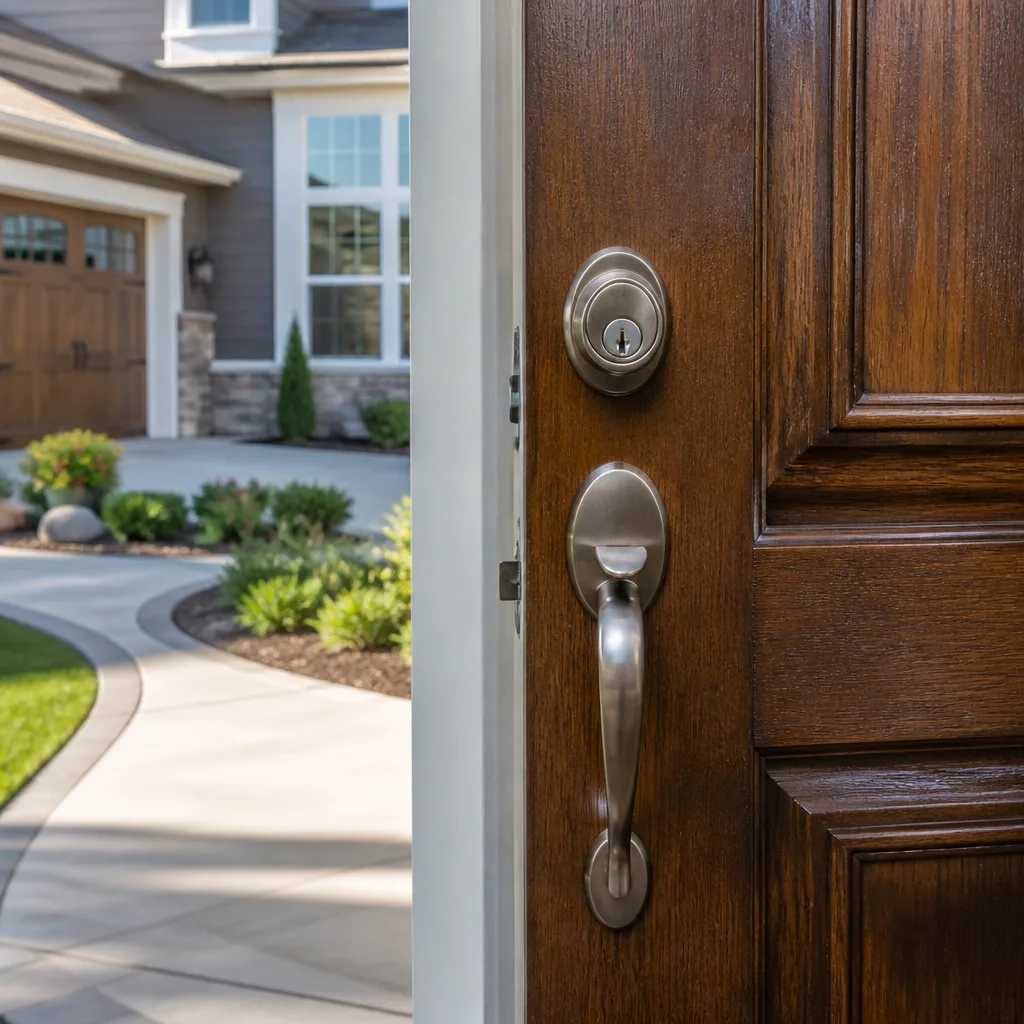
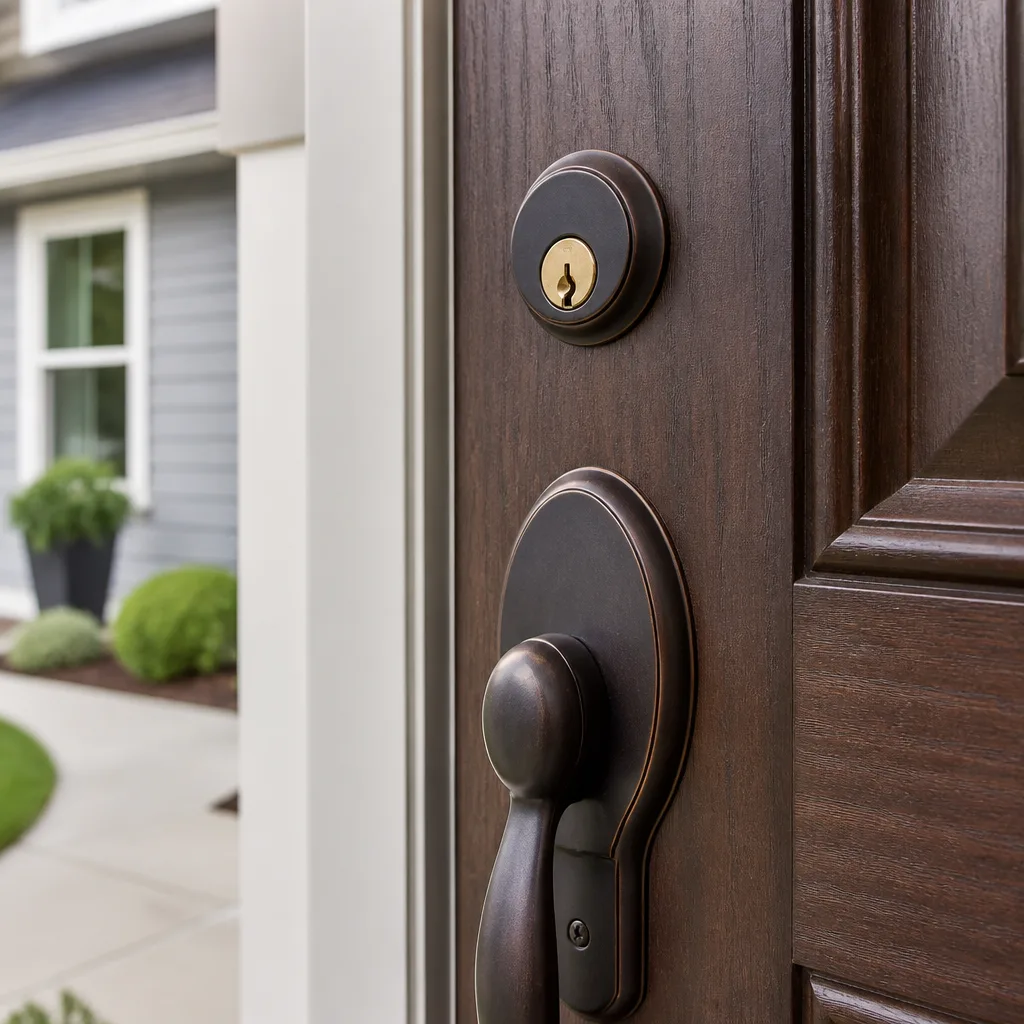
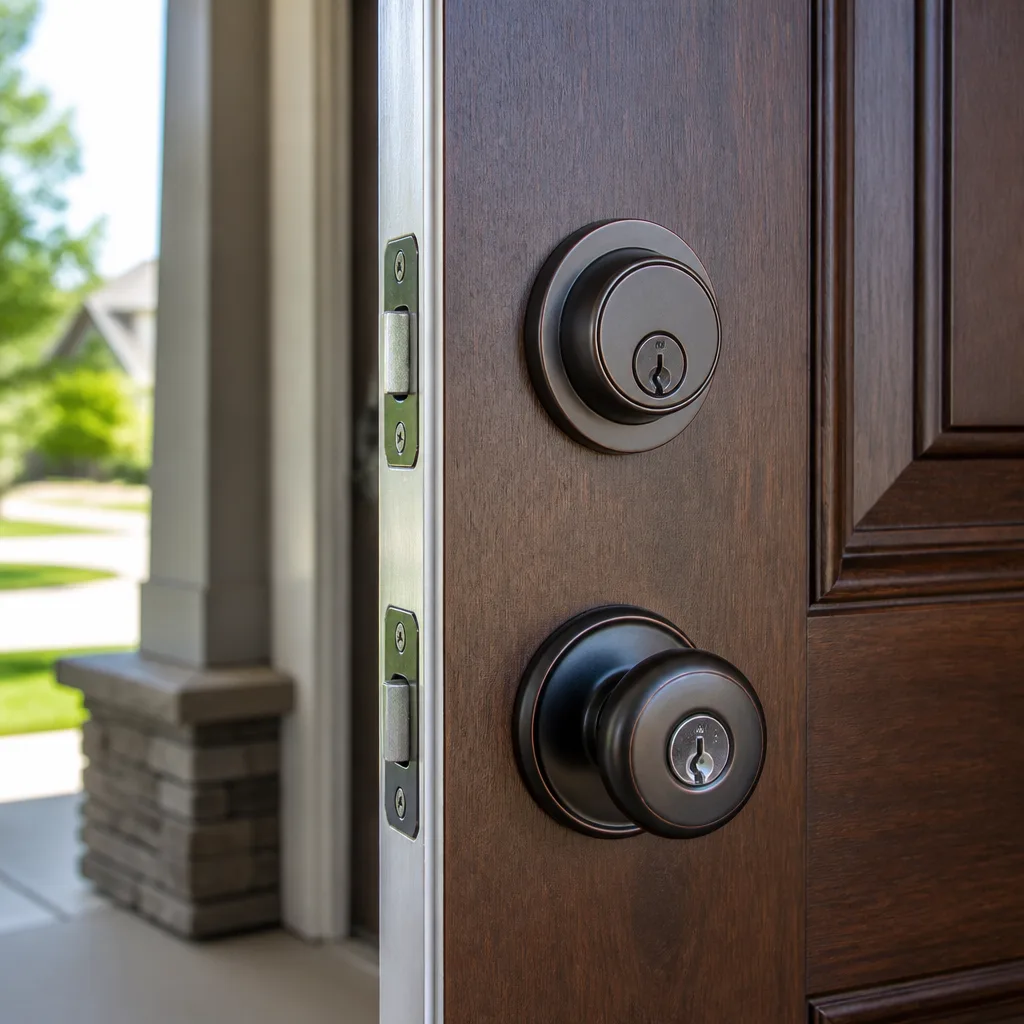
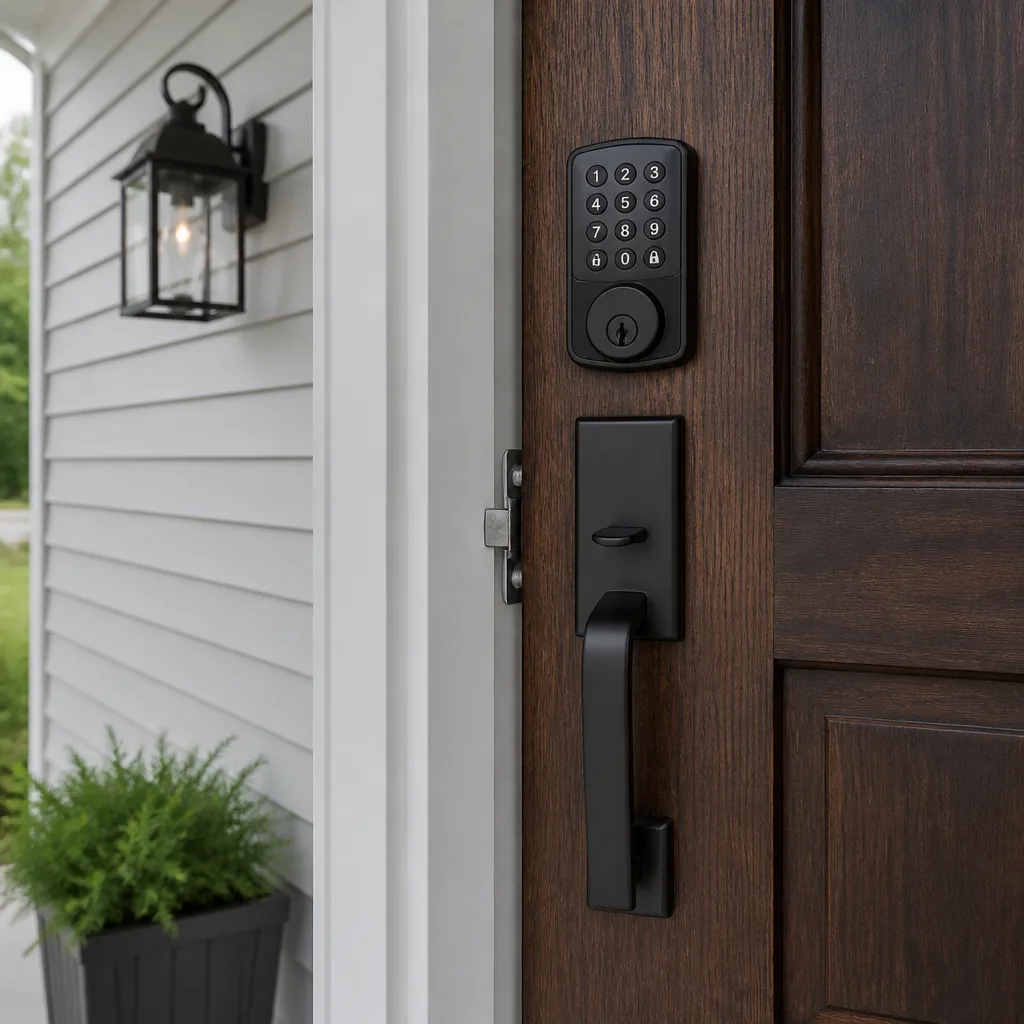
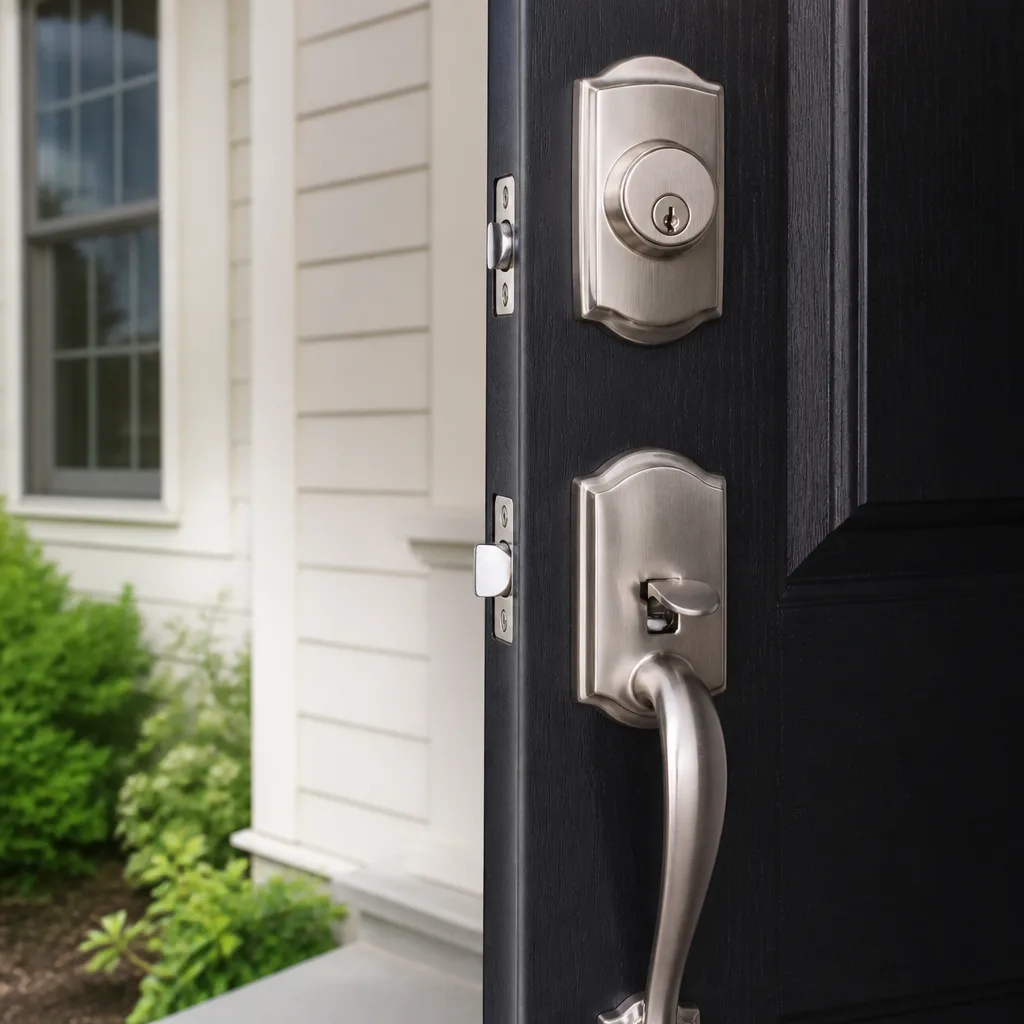
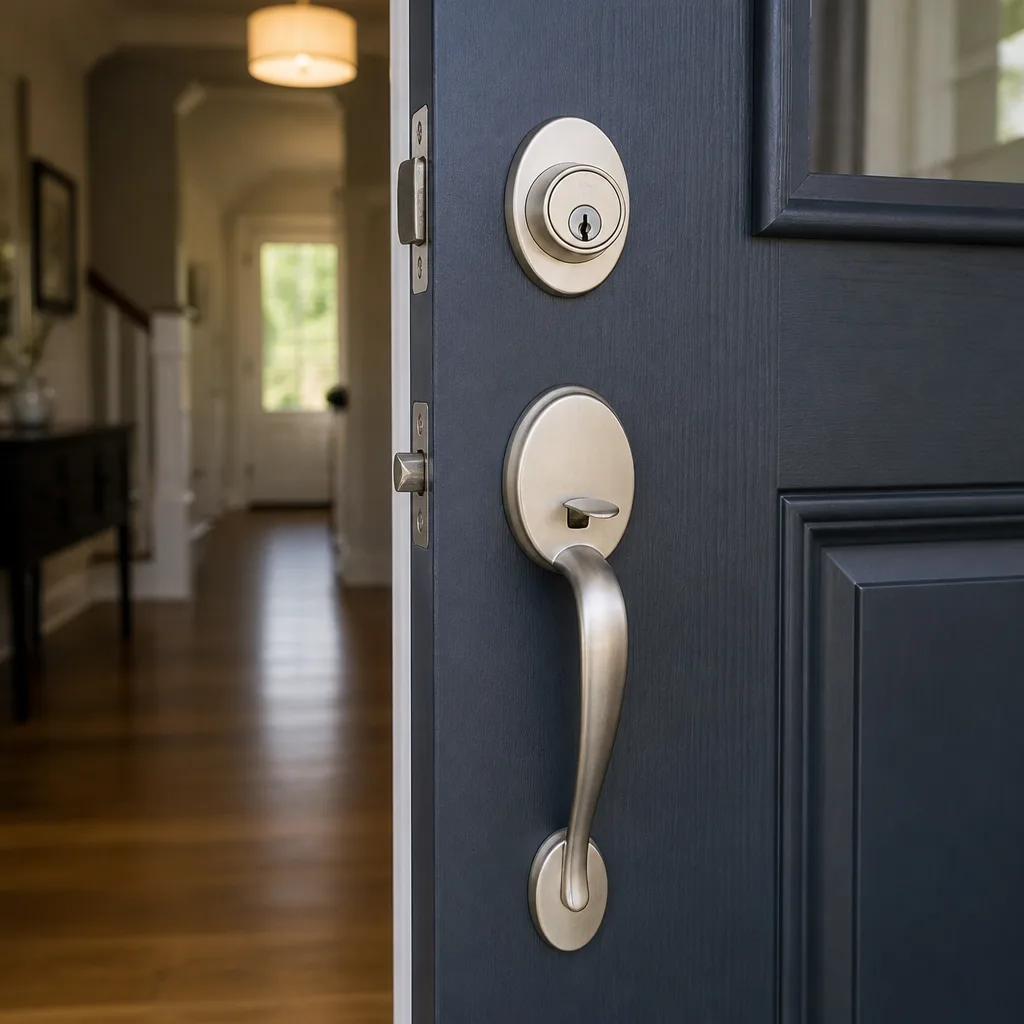
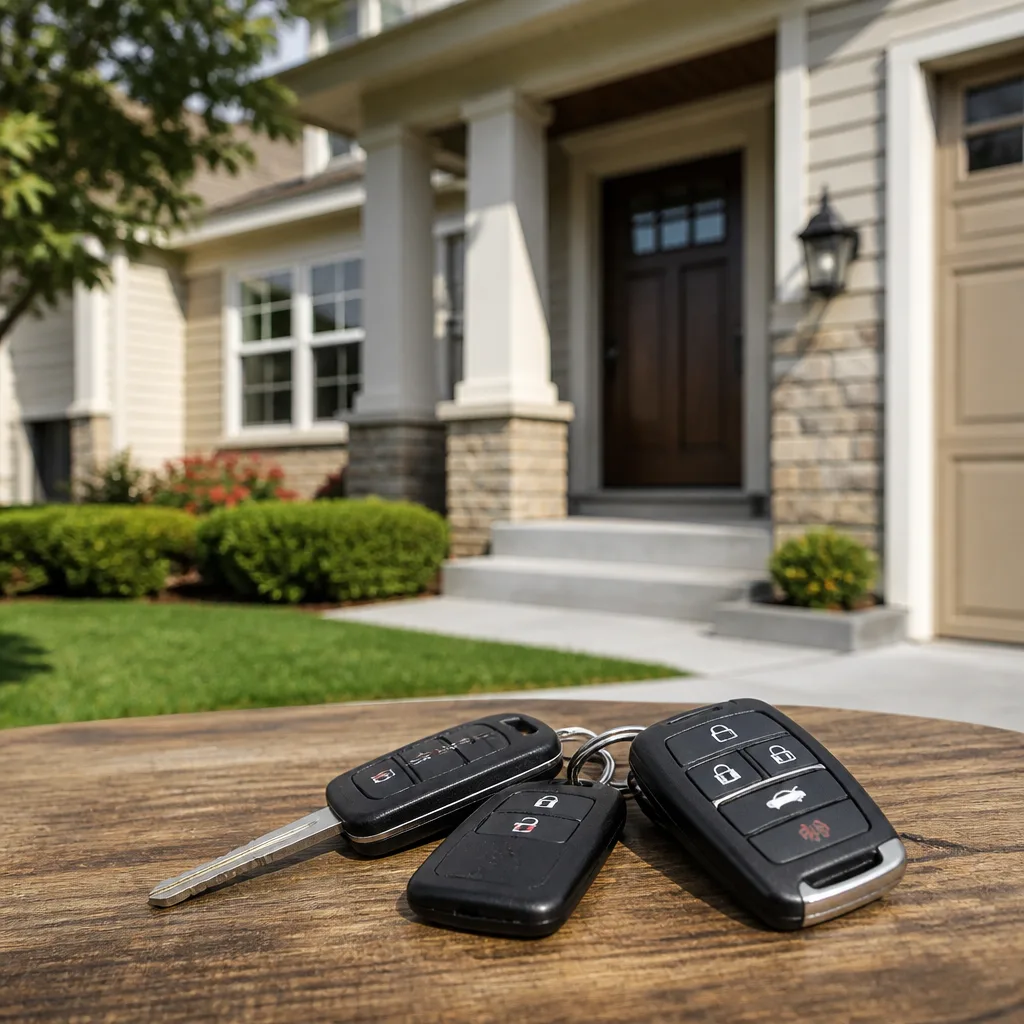
DIY vs Professional Locksmith: The Los Angeles Homeowner’s Decision Guide
Rekeying a Kwikset SmartKey takes four minutes and a $10 tool from the hardware aisle. Rekeying a Medeco or Mul-T-Lock cylinder requires proprietary tools, factory-controlled key blanks, and a technician trained on that specific platform. We’ve seen Los Angeles homeowners destroy $200 high-security cylinders attempting the second task after succeeding at the first. This guide draws the line by task, not by your confidence level - because the failure modes that matter aren’t embarrassing, they’re expensive, and some void your insurance coverage in California.
You’ll learn which five lock tasks are genuinely DIY-appropriate, which seven create security liabilities or claim denials, how to read your hardware’s grade and brand to decide, and what a failed DIY attempt actually costs to fix in the Los Angeles market. For a deeper look at pricing, see our Locksmith Cost Breakdown: The Los Angeles Homeowner’s Reference for 2026.
Quick Answer
Most Los Angeles homeowners can handle Kwikset SmartKey rekeying, strike plate reinforcement, and sliding door lock replacement. Professional locksmiths should handle pin tumbler rekeying, high-security cylinder work, master key changes, and any lock tied to your insurance policy’s security requirements. The dividing line is not skill - it’s whether a mistake converts a $15 attempt into a $250 parts bill plus labor, or worse, a denied break-in claim.
Table of Contents

- What Homeowners Can Reasonably DIY
- Tasks Where DIY Fails Expensive
- The Insurance Problem in California
- How to Read Your Hardware for DIY Eligibility
- Real Cost Comparison: Los Angeles Market
- When DIY Becomes a Security Liability
- Common Mistakes to Avoid
- When to Call a Professional
- Frequently Asked Questions
- The Bottom Line
What Homeowners Can Reasonably DIY
Some lock tasks have forgiving failure modes. You can strip a screw, buy another, and try again. These four tasks fall in that category for most Los Angeles homes built between 1985 and 2025.
1. Kwikset SmartKey Rekeying
Kwikset’s SmartKey system, common in entry-grade hardware sold at Home Depot and Lowe’s throughout Los Angeles County, uses a sidebar mechanism designed for homeowner rekeying. You need the current working key, the new key, and the SmartKey learn tool - a small metal piece that costs under $10. Insert current key, rotate 90 degrees, insert learn tool, remove current key, insert new key, rotate back. The cylinder reconfigures to the new key’s bitting in seconds.
The failure mode is benign. If you botch the sequence, the cylinder enters a “default” state and accepts the reset cradle that Kwikset includes in most hardware packages. We’ve serviced perhaps two dozen SmartKey cylinders in Silver Lake and Echo Park where the homeowner got stuck in the sequence, called us, and we finished the job in five minutes with no parts damage. The cylinder survived. The cost was a service call, not a replacement.
2. Deadbolt Strike Plate Reinforcement
Most forced entries in Los Angeles residential burglaries occur at the strike plate, not the lock. The standard strike plate installed by builders is 3/4-inch soft steel held by 3/4-inch screws into the door jamb. A strike plate reinforcement kit (about $12-$18) includes a 4-inch plate and 3-inch screws that bite into the wall framing behind the jamb.
This is drilling and screwing. Measure twice, use a pilot bit, and don’t split the jamb. If you strip a screw, extract it and use the next size. No security-critical function depends on precision.
3. Door Hinge Tightening and Adjustment
Sagging doors cause latches to miss strikes, deadbolts to bind, and homeowners to think their lock is broken when it’s actually geometry. Longer screws through the top hinge into the framing, or a cardboard shim behind a leaf, fixes most cases. We’ve been called to Los Feliz and Atwater Village homes where the “broken lock” was a 1/8-inch sag that a homeowner could have diagnosed with a level.
4. Basic Sliding Door Lock Replacement
Patio sliding door locks are surface-mounted, not mortised. Two screws, swap the keeper, done. Buy the same footprint or slightly larger to cover old screw holes. The security function is secondary to the primary door lock anyway.
What these tasks share: no precision timing, no spring-loaded components under tension, no keyway geometry that must be preserved, and no insurance policy language referencing “professional installation.”
Tasks Where DIY Fails Expensive
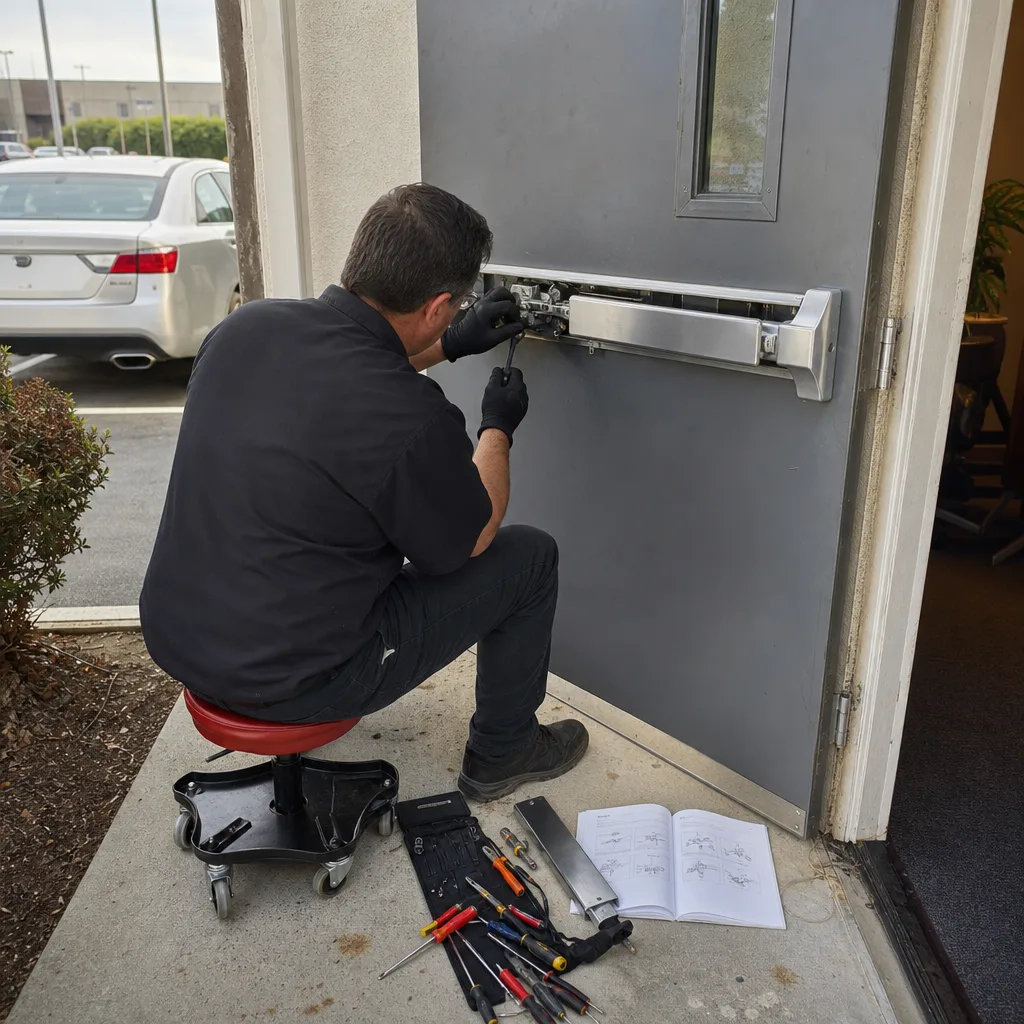
These seven tasks share a different profile: the failure mode destroys parts, compromises security in ways you can’t see, or violates conditions in your homeowner’s policy.
1. Pin Tumbler Rekeying Without Proper Tools
Standard Schlage, Kwikset non-SmartKey, Baldwin, and Sargent cylinders use pin tumblers - small brass pins of varying lengths that align at the shear line when the correct key is inserted. Rekeying requires removing the cylinder plug while maintaining spring pressure on the top pins with a plug follower, a precisely machined tube that substitutes for the plug during the swap.
Without a plug follower, the top pins and springs launch into the cylinder body. In our Van Nuys and North Hollywood calls, we’ve opened cylinders to find homeowner attempts where the springs were bent, the pins were mixed, or the plug was reinserted 180 degrees reversed. The cylinder is scrap. A standard Schlage deadbolt cylinder costs $35-$55 to replace; a Baldwin or Sargent runs $80-$140. Plus the rekey labor you were trying to avoid.
2. High-Security Cylinder Work (Medeco, Mul-T-Lock, Abloy)
These aren’t better versions of standard locks. They’re different architectures entirely. Medeco uses rotating pins with angled cuts. Mul-T-Lock uses pin-in-pin telescoping drivers. Abloy uses rotating discs, not pins. Each requires proprietary key machines, factory-authorized key blanks with restricted distribution, and technician certification on that specific platform.
We’ve replaced Medeco cylinders in Hancock Park where a homeowner attempted to disassemble the unit to “clean it,” destroying the sidebar alignment. We’ve seen Mul-T-Lock cylinders in Beverly Hills with homemade key copies cut on standard machines - the key enters but doesn’t lift the inner pins, so it turns with no resistance and provides zero security. The homeowner didn’t know. The cylinder was silently compromised for months.
Residential Locksmith in Los Angeles services from Novak Lock & Security include factory-authorized work on these platforms, with written pricing before any work begins.
3. Master Key System Changes
Master keying creates a mathematical relationship between keys and pin stacks. A change to one key’s bitting affects the pinning of every other key in the hierarchy. We’ve been called to commercial properties in Downtown Los Angeles and Koreatown where a well-meaning facilities manager rekeyed one office, inadvertently creating a key that now operated multiple suites. The liability exposure is severe. Commercial Locksmith in Los Angeles master key work requires a pinning chart, a pinning calculator, and documentation of every change.
4. Electric Strike and Access Control Wiring
Electric strikes, maglocks, and card readers integrate with fire alarm systems in California commercial and multi-family residential buildings. Miswired strikes can fail to release during a fire alarm, violating NFPA 72 and California Fire Code. Access Control Systems in Los Angeles require coordination with the fire alarm contractor, not just electrical competence. We’ve replaced DIY electric strike installations in Mid-Wilshire where the strike was wired to continuous power, creating a fire hazard and a code violation that the building inspector flagged.
5. Safe Combination Changes and Bolt Work Repair
Mechanical safe locks have contact points, wheels, and fence levers with tolerances measured in thousandths of an inch. A misaligned change key or forced wheel pack destroys the lock. Electronic safe locks have factory reset procedures that, if interrupted, can brick the lock. We don’t service homeowner-opened safes in most cases - the liability is too high, and the manufacturer warranty is void.
6. Automotive Transponder Key Programming
Post-2010 vehicles require transponder chips matched to the immobilizer, not just a cut key. Consumer-grade programmers exist for some platforms, but brick the ECU on others. A failed programming attempt on a Honda or Toyota can require dealer-level equipment to recover, at dealer-level pricing.
7. Lock Installation in Fire-Rated Doors
California Building Code requires specific hardware on fire-rated assemblies. A homeowner-installed deadbolt with the wrong backset or faceplate can compromise the door’s fire rating. In a claim after a fire, the insurer’s investigator will photograph the hardware. If it’s non-compliant, coverage can be contested.
The Insurance Problem in California
This is the point most DIY guides omit entirely, and it’s the most expensive.
California homeowner’s policies contain a “reasonable precautions” clause. The exact language varies by carrier, but the structure is consistent: the policyholder must maintain locks and security devices in working condition, and any modification must not reduce the security below the standard at policy inception.
We’ve reviewed claim denials where the insurer’s adjuster documented:
- A self-installed deadbolt with the strike plate missing (the homeowner never installed it)
- A rekeyed cylinder with no bottom pins in two chambers (springs lost during DIY, cylinder reassembled incomplete)
- A “high-security” lock purchased online that was counterfeit Medeco, confirmed by the manufacturer’s fraud unit
- A smart lock installed over a damaged bore hole, leaving a 1/4-inch gap visible from the exterior
In each case, the break-in occurred at the self-installed entry point. The insurer denied or reduced the claim, arguing the homeowner’s modification created the vulnerability. These aren’t hypotheticals. We’ve been called to rekey or replace the hardware after the claim, and the homeowner shows us the denial letter.
The critical distinction: a licensed locksmith’s installation creates a record. At Novak Lock & Security Los Angeles, every job includes a documented photo record left with the customer, a written scope, and a written warranty under the 365-Day Done Right Promise. If you’re evaluating providers, our How to Hire a Locksmith Contractor in Los Angeles: A Step-by-Step Guide covers what to verify before hiring. If an insurer questions the installation, you have documentation from a state-licensed contractor. A DIY installation has no such record.
Los Angeles County’s density and burglary rates make this relevant. The LAPD’s 2023 crime data shows residential burglary rates in the San Fernando Valley and Westside remain above state averages. Insurers in this market scrutinize security-related claims more closely than in lower-risk counties.
How to Read Your Hardware for DIY Eligibility

Use this decision tree before starting any lock task. It takes two minutes and can save you $200.
Step 1: Identify the Brand
Look for the brand name on the key, the cylinder face, or the latch.
- Kwikset SmartKey: Look for the small slot next to the keyway. If present, DIY rekeying is designed for you.
- Kwikset non-SmartKey, Schlage, Defiant, Gatehouse: Standard pin tumbler. DIY rekeying requires a pinning kit and plug follower. Without those, call a professional.
- Baldwin, Emtek, Omnia: Decorative hardware, often with custom cylinders. Cylinder removal varies by design. Document with photos before disassembling.
- Medeco, Mul-T-Lock, Abloy, ASSA: High-security. Do not attempt disassembly. Key duplication also requires authorized providers.
- No visible brand, “Amazon Basics,” unmarked: Unknown grade and origin. Replace rather than rekey - the metal quality may not survive disassembly.
Step 2: Check the Grade
ANSI/BHMA grades appear on the packaging or a stamp inside the strike plate:
- Grade 1: Commercial duty, heavy use. Residential overkill but excellent. Hardware is robust, disassembly is straightforward for professionals.
- Grade 2: Light commercial / heavy residential. Most quality deadbolts. DIY-eligible for surface tasks only.
- Grade 3: Residential minimum. Common in builder-grade hardware. Often pot metal internals that crack during disassembly.
We’ve replaced Grade 3 hardware in Mar Vista and Palms where a homeowner’s rekey attempt cracked the plug. The cylinder housing was zinc die-cast, not brass. It was never going to survive manipulation.
Step 3: Assess the Installation Type
- Surface-mounted: Screws visible from the door face. DIY-eligible for replacement.
- Mortised: Lock body inside a pocket cut into the door edge. Requires disassembly of trim plates to access screws. Document screw positions and spring placements with photos - they’re not all identical.
- Cylindrical bored: Standard deadbolt, two holes through the door. Crossbore must be 2-1/8 inch, backset 2-3/8 or 2-3/4 inch. Measure before buying replacement hardware.
- Integrated handle set: Handle, deadbolt, and interconnect in one mechanism. Internal linkages are timing-critical. One misaligned cam and the handle won’t retract the latch.
Step 4: Check Your Policy Documents
Search your homeowner’s policy PDF for “security device,” “lock,” or “burglar resistant.” If the policy specifies “professionally installed” or references a specific grade, document that before modifying anything. In California, Mercury, State Farm, and Farmers policies vary significantly on this language.
Real Cost Comparison: Los Angeles Market
These are 2024-2025 price ranges we’ve observed and charged in the Los Angeles market. They include parts and labor. Competitor pricing varies; our policy is written pricing before dispatch, with no call-out surcharge added on arrival.
| Task | DIY Attempt Cost | Professional Cost, Novak Lock & Security Los Angeles | DIY Failure Cost (Typical) |
|---|---|---|---|
| Kwikset SmartKey rekey | $8-$15 (tool only) | $25-$45 per cylinder | $25-$45 service call if stuck |
| Standard pin tumbler rekey | $30-$60 (pinning kit) | $25-$45 per cylinder | $80-$200 (cylinder replacement + labor) |
| High-security cylinder rekey | Not possible without authorization | $85-$180 per cylinder | $200-$400 (destroyed cylinder + replacement + labor) |
| Deadbolt installation, new bore | $40-$90 (hardware + tools) | $150-$280 | $250-$450 (door repair or replacement if split) |
| Strike plate reinforcement | $12-$18 (kit) | $45-$85 | $45-$85 (minimal failure mode) |
| Smart lock installation | $150-$400 (hardware) | $200-$450 (including hardware options) | $300-$600 (damaged door + hardware + professional install) |
| Master key system, 3 cylinders | Not feasible without training | $180-$350 | $400-$800 (security compromise + full rekey) |
| Electric strike installation | $80-$200 (hardware) | $350-$650 | $600-$1,200 (code violation + fire alarm integration + replacement) |
The pattern: DIY saves money only when the failure mode is benign and the task is designed for homeowner execution. SmartKey rekeying and strike plate reinforcement fit. Everything else converges on professional cost or exceeds it after failure.
Haven Standard Clause 1: the price on the phone is the price on the invoice. No exceptions. This applies to every figure we quote, including the ranges above.
When DIY Becomes a Security Liability
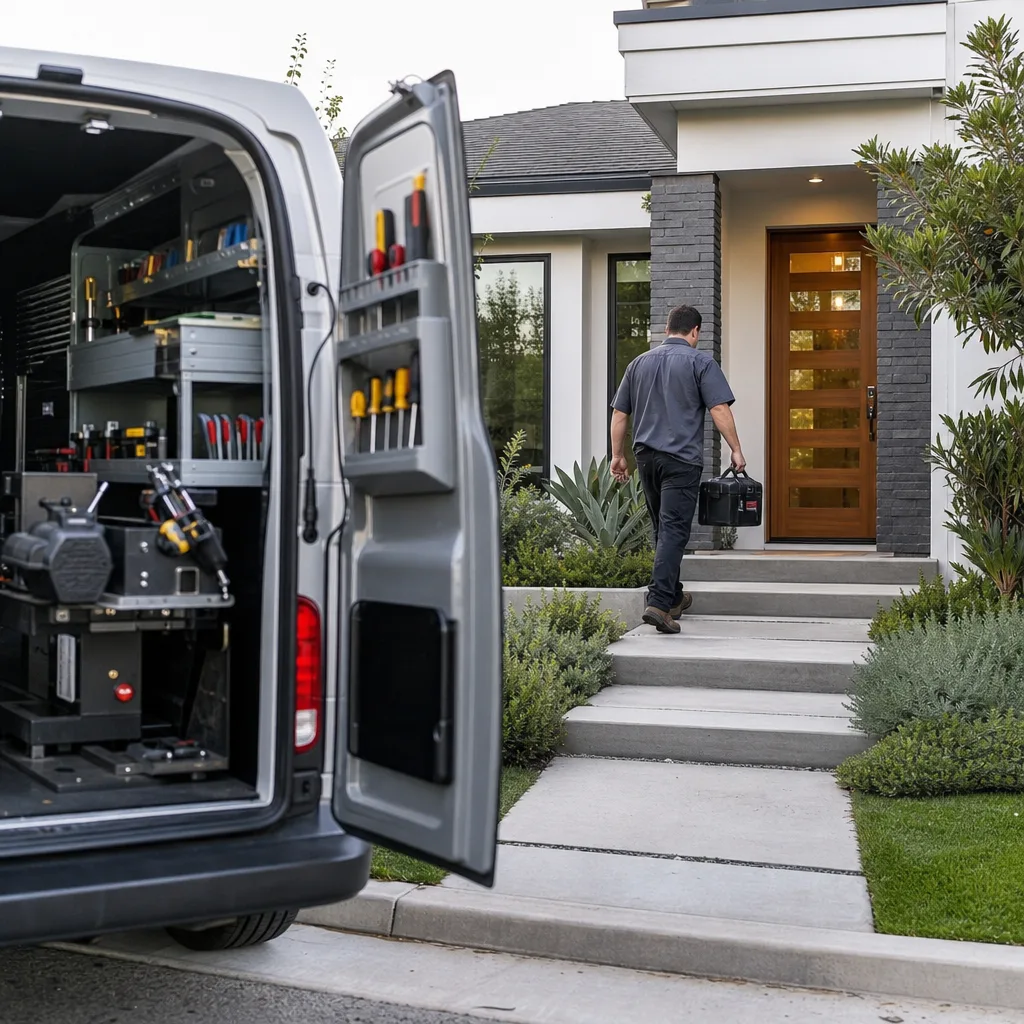
Some failures don’t cost money immediately. They create invisible security gaps that persist until a break-in reveals them.
The “Works on My Key” Problem
A homeowner rekeys a cylinder, tests it with the new key, and considers it done. They didn’t test whether the old key still operates. In pin tumbler rekeying, if the new key’s bitting is close to the old key’s bitting, both may lift pins to the shear line. The old key still works. The homeowner doesn’t know. We’ve found this in rekeyed cylinders from other providers too - it’s not exclusively a DIY issue - but DIY attempts have higher incidence because the tester is also the person who wants the task finished.
The Wrong Backset, Wrong Handing
Deadbolts come in 2-3/8 inch and 2-3/4 inch backsets (the distance from the door edge to the center of the bore). Install the wrong one and the bolt doesn’t align with the strike. Some homeowners enlarge the strike hole with a file or Dremel, weakening the jamb. Others leave the bolt extended but not engaging, so the thumb turn feels secure but the bolt isn’t in the strike. A firm push opens the door.
The Smart Lock Overlay
Consumer smart locks (August, Yale Assure, Schlage Encode) install over existing deadbolts or replace them. When installed over a damaged or misaligned bore, the motor strains, the batteries drain in weeks, and the lock fails to extend or retract fully. The homeowner thinks it’s a smart lock problem. It’s an installation geometry problem. We’ve replaced smart locks in Culver City and Westchester where the underlying deadbolt was Grade 3 builder hardware with a worn cam, and the smart lock’s motor was fighting friction it wasn’t designed for.
The Counterfeit Hardware Problem
Los Angeles has active markets for counterfeit high-security locks sold through online marketplaces. They look correct, package correctly, and fail under inspection. We’ve identified counterfeit Medeco cylinders by weight (lighter than brass, zinc die-cast), by keyway profile (slightly off, visible under magnification), and by the absence of factory laser-marking. Homeowners buy “Medeco” online, install it, and believe they have high security. They have a decorative cylinder that standard picks open in seconds.
Factory-authorized work matters. Novak Lock & Security Los Angeles sources Medeco, Mul-T-Lock, Abloy, Baldwin, and Schlage through authorized distribution. We document the serial numbers on the invoice.
Common Mistakes to Avoid
- Using graphite powder on modern locks. Graphite was standard advice in the 1980s. Modern locks use polymer and nylon components that graphite gums up. In Los Angeles’s dry climate, graphite also cakes into a hard residue. Use a Teflon-based dry lube or call for service.
- Reassembling a cylinder without checking pin orientation. Pin tumblers have a radius on one end and a flat on the other. Flat side faces the key. Reversed pins create a false shear line - the key turns with resistance, but the lock is easier to pick and wears rapidly.
- Installing a deadbolt on a door with glass within 18 inches of the lock. California building code and basic security practice: the deadbolt must be on a solid panel. A deadbolt above a glass lite is a burglar’s access point - they break the glass and reach through. We’ve rekeyed after break-ins in Los Feliz and Los Angeles proper where this exact configuration allowed entry in under 30 seconds.
- Buying rekeying kits for “all brands” online. These contain bottom pins in standard increments. Schlage uses .015-inch increments. Kwikset uses .023-inch. Generic kits compromise both. The key works poorly, wears quickly, and the lock becomes pickable.
- Ignoring the door frame condition. A Grade 1 deadbolt in a rotted jamb with a shallow strike is security theater. Check the jamb with an awl. Soft wood means the strike will pull out under force, regardless of lock quality.
- Assuming “high security” marketing means high security. Many consumer locks labeled “pick resistant” or “bump proof” use standard pin tumblers with one security pin. Real high-security locks have patents, restricted keyways, and factory authorization. The price reflects this - a genuine Medeco cylinder costs $180-$280, not $45 on Amazon.
- Not documenting before disassembly. Photograph screw positions, spring orientations, and component stacking before removing anything. Most lock mechanisms are not intuitive to reassemble. The photo record we leave with customers is standard procedure at Novak Lock & Security Los Angeles for exactly this reason.
When to Call a Professional
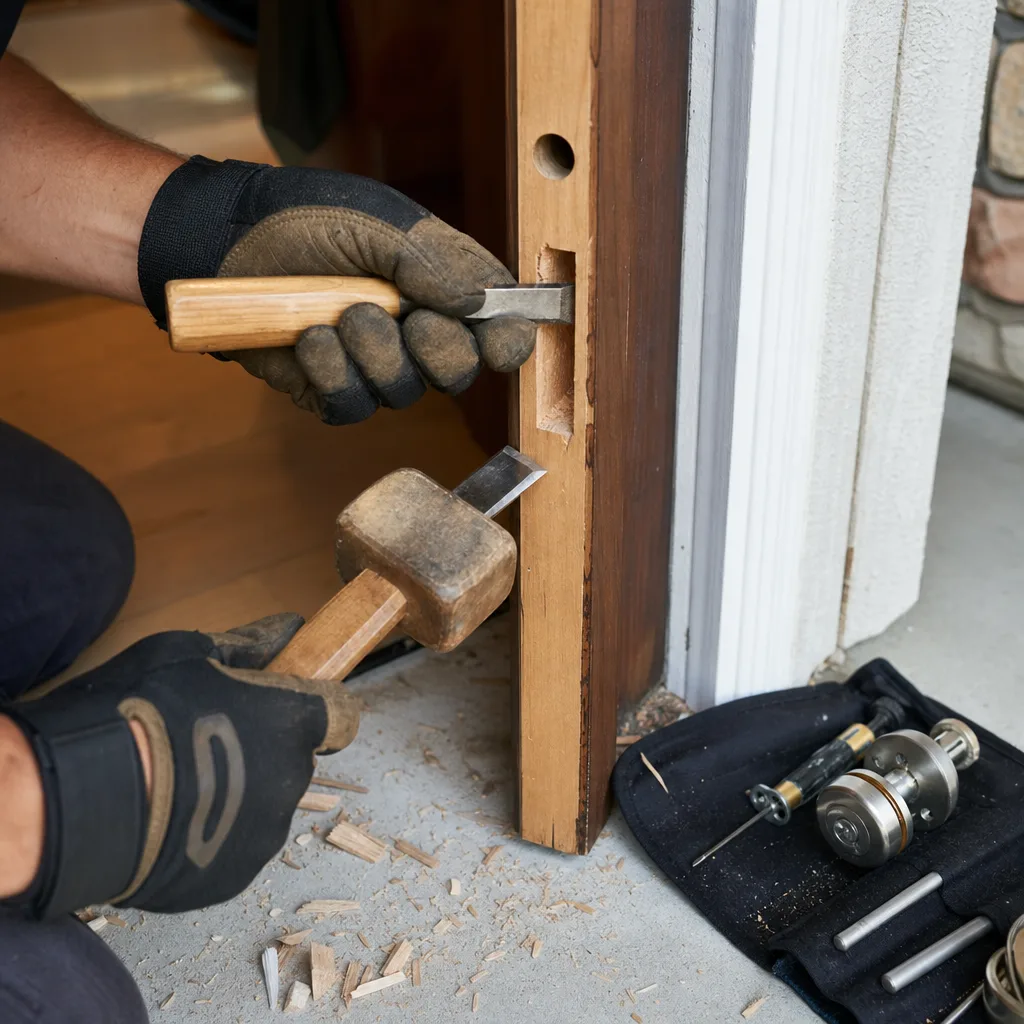
Call when the task involves precision you can’t verify, security you can’t test, or documentation you might need. Browse our more guides & resources for additional help deciding when to DIY and when to hire a pro. Specifically: high-security cylinders, master key systems, electric strikes, safe work, fire-rated door hardware, any lock tied to insurance requirements, and any situation where a mistake costs more than the professional service.
Novak Lock & Security Los Angeles offers free estimates in Los Angeles - call (213) 632-4875. Every estimate includes a written scope and firm price before dispatch, under Haven Standard Clause 1. Background-checked, uniformed technicians. Documented photo record on every visit. Factory-authorized work on Medeco, Mul-T-Lock, Abloy, Baldwin, and Schlage.
Free Second Opinion on Any Written Estimate: bring us a competitor’s quote and we will review it at no charge.
Frequently Asked Questions
Standard pin tumbler rekeying in Los Angeles typically runs $25-$45 per cylinder, with most single-family homes needing 2-4 cylinders. High-security cylinders like Medeco or Mul-T-Lock run $85-$180 per cylinder due to proprietary key blanks and factory authorization requirements. At Novak Lock & Security Los Angeles, we quote the full price on the phone before dispatch, and the technician is contractually prohibited from changing it at the door - Haven Standard Clause 1. Call (213) 632-4875 for an exact quote; estimates are free.
Kwikset SmartKey cylinders are designed for homeowner rekeying and take under five minutes with a $10 tool. Standard pin tumbler rekeying requires a plug follower, pinning kit, and depth key set - without these, you’ll likely destroy the cylinder. High-security cylinders cannot be rekeyed without factory-authorized tools and training. The test is not whether you can turn a screw; it’s whether you can verify the old key no longer works and the lock meets its rated security after you’re done. Call (213) 632-4875 if you’re unsure what cylinder type you have; we’ll identify it over the phone.
Yes, if the installation is found to have created or contributed to the vulnerability that led to a loss. California policies contain “reasonable precautions” clauses that require maintained, properly functioning security devices. We’ve reviewed claim denials where insurers documented self-installed deadbolts missing strike plates, incomplete rekeying with missing pins, or non-compliant hardware on fire-rated doors. A licensed locksmith’s installation creates a record - documentation, warranty, and a licensed contractor’s verification - that supports your position in a claim dispute.
Check the brand and key. High-security brands include Medeco, Mul-T-Lock, and Abloy. Their keys typically have dimples, angled cuts, or a distinctive profile not found in hardware store blanks. The cylinder face may show a patent number or “restricted” marking. Standard brands like Kwikset, Schlage, and Defiant use flat metal keys with straight cuts. If you’re uncertain, text a photo of your key and cylinder to (213) 632-4875 - we’ll identify it at no charge.
Destroyed high-security cylinders and smart lock installations that damaged the door. A Medeco cylinder destroyed in DIY disassembly costs $200-$400 to replace including labor - more than professional rekeying would have cost. Smart locks installed over misaligned bores or weak jambs create recurring failures that homeowners address with repeated hardware purchases, not recognizing the underlying geometry problem. The most expensive invisible mistake: a rekeyed cylinder that still accepts the old key, leaving the homeowner with false security for months.
No. Haven Standard Clause 1 prohibits adding charges on arrival. The price quoted on the phone is the price on the invoice. No call-out surcharge, no “service fee,” no trip charge added after we arrive. This rule has been in place since 2002. If the scope changes - you add a cylinder, or the hardware condition requires replacement - we quote the revised price in writing before proceeding, and you approve it. Call (213) 632-4875 for a firm quote.
Emergency lockout response in Los Angeles typically ranges from 20-45 minutes depending on traffic and your location. Calls are answered by a live person, 24/7 - no voicemail queue, no callback window. The dispatcher quotes a firm price including labor to open, and the technician carries the tools to complete the job without return trips. For non-emergency work - rekeying, installation, access control surveys - we schedule at your convenience, with a written scope and flat pricing confirmed before arrival.
The Bottom Line
The DIY vs. professional locksmith question is not about your competence. It’s about which tasks have failure modes that convert a small savings into a larger cost, a security gap, or a coverage dispute. In Los Angeles’s active burglary market and insurance environment, that distinction matters.
Kwikset SmartKey rekeying, strike plate reinforcement, and surface-mounted hardware replacement are genuinely DIY-appropriate. Pin tumbler rekeying, high-security cylinder work, master key systems, electric strikes, and anything on a fire-rated door are not. The dividing line is verifiable: can you test the result against a security standard, and do you have documentation if it’s questioned?
Since 2002, Novak Lock & Security Los Angeles has operated under a single rule: written price before any work starts, every job, no exceptions. The Haven Standard governs every visit, every technician, every documented photo record. If you’re uncertain where your task falls, call for a free estimate - we’ll tell you honestly whether it’s worth your time or ours.
Written by Daniel Novak, Owner at Novak Lock & Security Los Angeles, serving Los Angeles since 2002.