
Non-destructive entry first, always - and we re-key Schlage, Kwikset, and Baldwin locks on the spot while you watch
You get a price before we start. It does not change when we arrive. No surprises.
Schlage Car Key Cutting: The Los Angeles Owner’s Guide
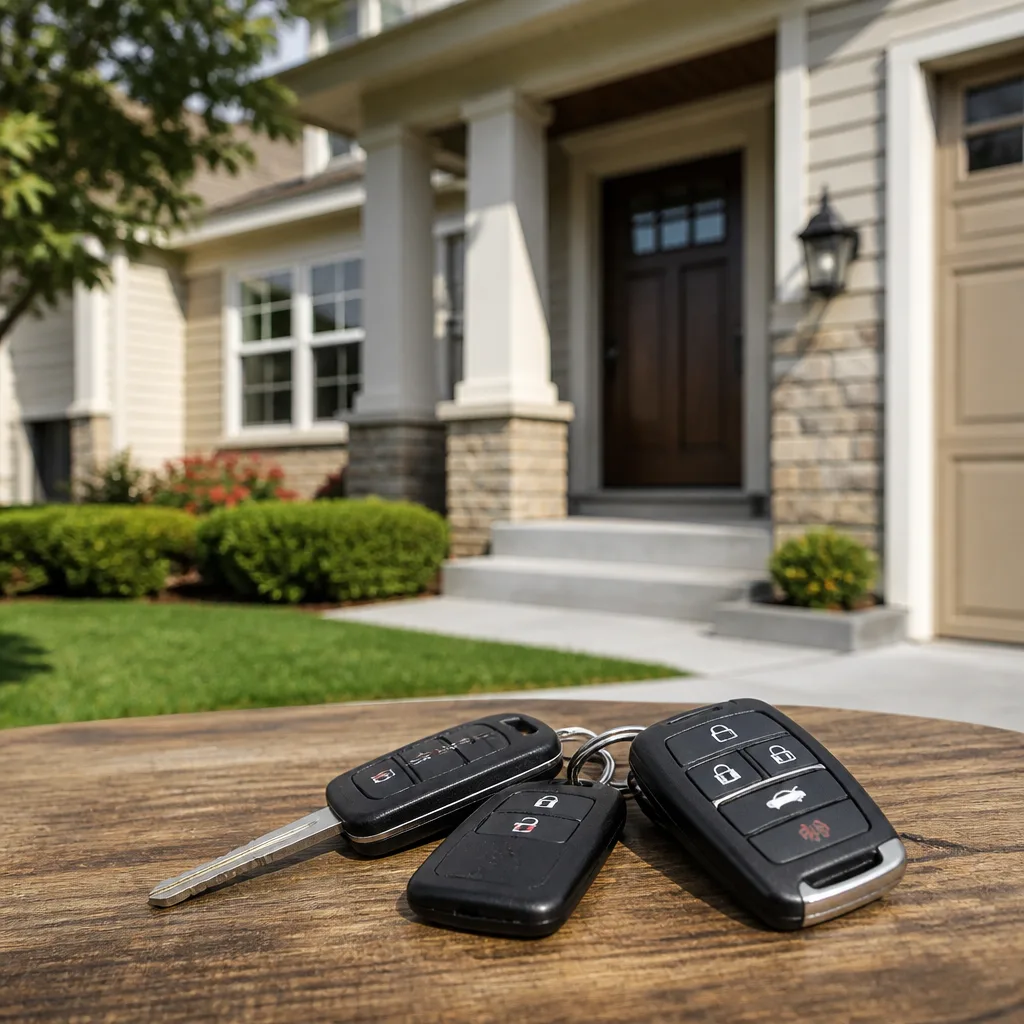
Schlage car key cutting in Los Angeles typically runs $85-$165 for a standard transponder or sidewinder key, including on-site programming, with same-day service available across the metro area. We stock Schlage-compatible key blanks and programming equipment on every van, so most jobs are finished in 20-40 minutes at your location. Most Los Angeles owners discover the problem when their Schlage key stops turning smoothly in the ignition, starts sticking in door cylinders, or fails to start the vehicle after the fob buttons still work.
Which Schlage Models This Applies To
Schlage does not manufacture automotive locks directly, but the Schlage name appears on two distinct key-cutting scenarios we handle regularly in Los Angeles. First, aftermarket Schlage-branded automotive key blanks compatible with certain Ford, Lincoln, and Mercury models from 1998-2012, particularly those using the H72-PT transponder blank or the Schlage SC1-derived residential-to-automotive crossover keys found in fleet vehicles. Second, and more commonly, owners confuse Schlage residential keyways with automotive needs when rekeying a vehicle after purchasing a used fleet car previously serviced by a commercial locksmith.
To identify what you actually have: check the bow (the head) of your existing key for a stamped “SC1,” “H72-PT,” or “Schlage” marking. The H72-PT is a brass transponder blank with a glass pellet embedded at the shoulder, 0.312 inch wide at the blade tip, compatible with Ford PATS systems. The SC1 is a standard five-pin residential keyway that occasionally appears on light commercial fleet vehicles with aftermarket ignition swaps. We carry both OEM Strattec blanks and Ilco aftermarket equivalents. The Ilco H72-PTB runs about $12 less per blank and programs identically, though the brass alloy is slightly softer, which we note in the written quote before cutting.
One compatibility gotcha specific to Los Angeles: fleet vehicles registered through commercial leasing companies in the Arts District and Vernon often have non-standard ignition cylinders installed during prior rekeying. The key blank may match the door but not the ignition, or vice versa. We check both cylinders on-site before cutting anything. Haven Standard Clause 1 applies: the price we quote after inspection is the price on the invoice, even if we find a mismatch.
Signs Your Schlage Car Key Cutting Is Failing

- The key sticks or requires jiggling to turn. This usually indicates wear at the tip of the blade or mushroomed pin chambers inside the cylinder. In Los Angeles, the combination of fine desert dust from the east and coastal salt air accelerates brass wear; we see this most often on vehicles parked outdoors in Venice and Santa Monica.
- The remote buttons work but the car will not start. The transponder pellet in the key head has failed or lost programming. Schlage-compatible H72-PT blanks use a glass-encased Texas Instruments 4D-63 chip, which is vulnerable to drop damage and extreme heat. Dashboard temperatures in a parked Los Angeles car can exceed 160°F in July, enough to crack the pellet housing.
- The key turns but does not engage the starter. The blade has worn to the point where it lifts pins to shear line but no longer retracts the ignition interlock far enough. This is a progressive failure; owners often compensate by pulling the key outward slightly while turning, which damages the cylinder further.
- A newly cut copy works worse than the original. The duplicator machine used a worn guide or incorrect spacing. Schlage SC1 keyways require a .335 inch root depth with 0.150 inch spacing between cuts; a shop using a standard .343 depth wheel will produce a key that binds on the third and fourth pins.
- The key breaks off in the cylinder. Typically occurs at the shoulder where the blade meets the bow, the weakest point on aftermarket blanks with stamped rather than milled shoulders. We extract the fragment and cut a replacement from a solid brass blank with a milled shoulder, which costs roughly $18 more but will not fail the same way.
Replacement Cost & What’s Included
Schlage-compatible car key cutting and programming in Los Angeles breaks down as follows:
| Service | Typical Range |
|---|---|
| Standard mechanical key cut (SC1, no chip) | $45-$75 |
| Transponder key cut + clone programming (H72-PT) | $85-$135 |
| Transponder key cut + EEPROM programming (lost all keys) | $125-$165 |
| Key extraction from cylinder + replacement | $95-$145 |
| Ignition cylinder rekey to match new key | $65-$95 additional |
What drives the range: the programming method required. Clone programming copies an existing transponder signal to a new blank, faster and cheaper. EEPROM programming requires removing the vehicle’s immobilizer module to write a new key ID, necessary when all keys are lost. We state which method applies before dispatching, and the technician confirms it on arrival. No call-out surcharge is added. The 365-Day Done Right Promise covers both the cut and the programming; if the key fails to start the vehicle within one year, we replace it at no charge. Every job includes a documented photo record of the blank before cutting, the programmed key tested in all cylinders, and the written invoice.
DIY or Call Us?
What you can safely check yourself: the key bow stamp, whether the problem affects all cylinders or just one, and whether a spare key works better. A spare that performs normally tells you the cylinder is fine and the primary key is worn.
Where DIY goes wrong: transponder key programming requires equipment that costs $3,000-$8,000 and software licenses tied to specific vehicle makes. Clone attempts with consumer-grade programmers often “brick” the immobilizer, requiring dealer-level recovery at $400-$800. Cutting a key by code from the VIN without verifying the cylinder has been changed previously produces a key that fits the door but not the ignition, the most common Los Angeles fleet-vehicle scenario we encounter. The name on the van is the warranty. Call (213) 632-4875 and we will quote the exact method and price before anyone is dispatched.
FAQs
A properly cut transponder key typically lasts 7-12 years in normal use, though Los Angeles heat and coastal exposure reduce that to 5-8 years for vehicles parked outdoors daily. The transponder pellet itself has no moving parts and outlasts the blade; blade wear is what eventually causes failure. Call (213) 632-4875 for an exact quote on replacement, estimates are free.
No. Once a brass key blade has worn beyond factory tolerances, material has been lost and cannot be restored. Attempting to build up the blade with solder or epoxy creates a key that damages pin chambers. Replacement is the only sound repair. Call (213) 632-4875 for an exact quote, estimates are free.
Most jobs are completed in 20-40 minutes at your location. Clone programming adds 10 minutes; EEPROM programming adds 25-35 minutes. We stock Schlage-compatible blanks and programmers on every van, so no return trip is needed. Call (213) 632-4875 to schedule, estimates are free.
We stock H72-PT, SC1, and H75-PTE blanks on every van, along with Ilco equivalents for cost-sensitive jobs. Specialty blanks for discontinued fleet configurations are available next-day through our Vernon supplier. We verify stock against your VIN before dispatching. Call (213) 632-4875 to confirm availability for your specific vehicle, estimates are free.
Written by Daniel Novak, Owner, Novak Lock & Security Los Angeles at Novak Lock & Security Los Angeles, serving Los Angeles and nearby areas.